Move medical technology from promise to adoption.

We advise medical device boards and leadership teams on where to invest, what evidence to build and how to plan for adoption. Our work connects portfolio strategy with clinical and economic value, market access and the commercial choices that shape growth.

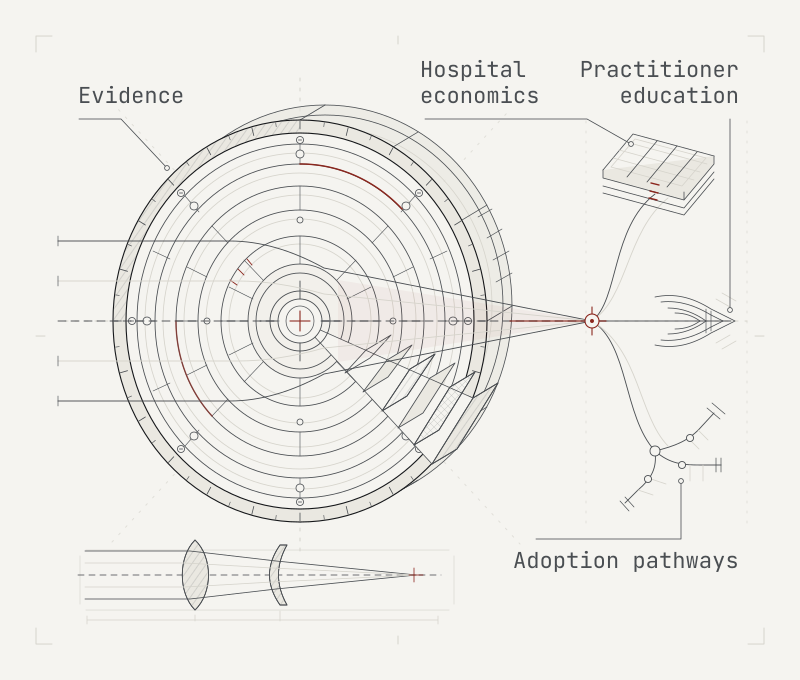
Conceptual optical study: concentric clinical evidence rings align with hospital economics, practitioner education and routes to market adoption.
Evidence, value and buying decisions. Aligned before launch.

When evidence and economics decide adoption.

  • A portfolio decision depends on uncertain market potential and evidence requirements.
  • A launch or market entry needs a clear case for access, value and adoption.
  • A differentiated product is struggling to gain traction with clinical and economic decision-makers.

Medical technology strategy.

Portfolio and investment strategy

Compare market attractiveness, unmet needs, competitive dynamics and portfolio fit. Decide which products, indications and geographies merit investment, and where to partner, defer or exit.

The output: Portfolio investment paper and market-priority scenarios.

Clinical and economic evidence strategy

Identify the clinical, economic and usability evidence each decision-maker needs. Connect evidence gaps to commercial priorities and establish what requires validation before investment, market entry or launch.

The output: Evidence strategy and decision-linked gap assessment.

Market access and value strategy

Connect clinical and economic value to the requirements of clinicians, hospital buyers and payers. Assess access barriers, pricing logic and funding assumptions before committing to a market.

The output: Market-access strategy, value proposition and pricing scenarios.

Launch and adoption strategy

Determine where to launch, which customers to prioritize and what could prevent adoption. Challenge readiness across positioning, evidence, buying pathways, clinical education and commercial capabilities.

The output: Launch strategy, readiness assessment and adoption roadmap.

Commercial model and lifecycle growth

Evaluate sales channels, account coverage and business models as products mature. Compare capital equipment, disposables and service economics, including the implications of robotics and AI-enabled products.

The output: Commercial-model options and lifecycle growth plan.

We work alongside qualified clinical, regulatory and market-access teams. Clinical care, study execution and formal submissions remain within their specialist remit.

From evidence gap to launch decision.

Three stages, scoped at the outset. Start with a focused review or retain us through execution.

Frame the decision

Agree the investment or commercial question, available evidence and constraints.

Test the options

Examine market, clinical and economic assumptions with your qualified specialist teams.

Set the course

Recommend priorities, decision gates and a roadmap for leadership review.

Device-specific depth.

Strategy informed by the realities of medical technology: clinical evidence, hospital economics and product adoption. Capital equipment, disposables, robotics and AI-enabled products.

  • Structural heart
  • Electrophysiology
  • Interventional cardiology
  • Neurointerventional care
  • Neuroradiology
  • Orthopedics
  • Cardiac rhythm management (CRM)
  • Implantable cardiac electronic devices
  • Heart failure
  • Robotics and AI-enabled MedTech
All practices

What will shape your next launch?

Start with the portfolio, evidence or market decision your leadership team needs to resolve.

Start a conversation