Build the organization your strategy needs.

Business strategy changes what an organization needs from its people. We help CEOs, people leaders and executive teams align structure, leadership and workforce investment with those demands, including how AI changes work, skills and accountability across the business.

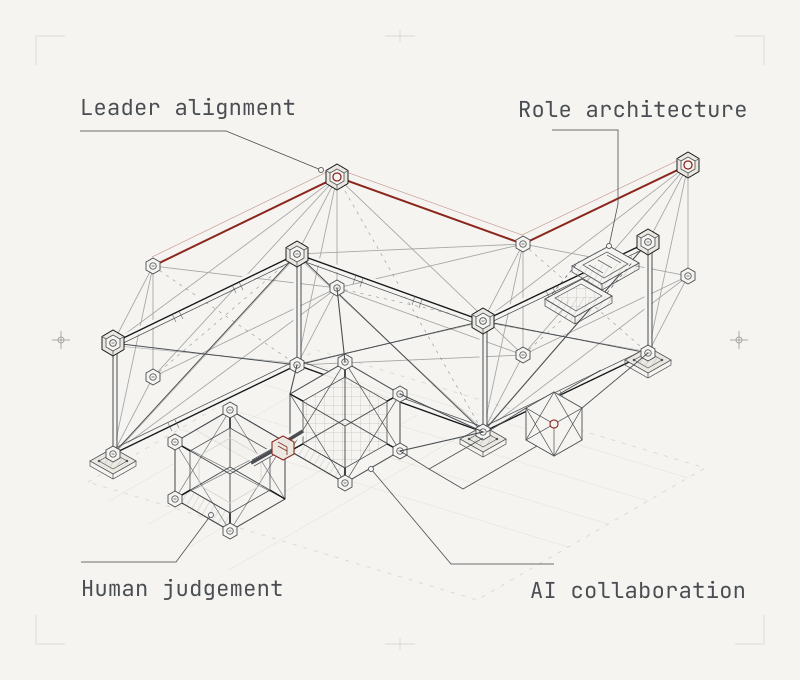
Conceptual structural network: leadership nodes, role trusses and collaborating human and AI teams form a connected capability architecture.
Reshape the work. Plan the transition. Keep people accountable.

When the strategy outgrows the organization.

  • A growth plan, restructuring or acquisition requires a different organization.
  • AI investment is changing work faster than workforce plans and leadership expectations.
  • People costs are rising while capability gaps and unclear accountability persist.

People and organization advisory.

People strategy and workforce investment

Translate growth and productivity priorities into workforce choices. Assess critical capabilities, capacity and location options so leaders can compare hiring, development, redeployment and external support before committing resources.

The output: Workforce investment plan with capability gaps, scenarios and resource priorities.

Organization design and decision rights

Design structures, management roles and decision rights around how the business creates value. Make trade-offs explicit, including accountability, coordination, leadership capacity and the cost of organizational complexity.

The output: Organization blueprint, role mandates and decision-rights map.

Workforce strategy for AI

Assess how AI changes work, roles and skills, then plan reskilling and redeployment. Employee-data boundaries and human accountability for employment decisions shape the recommendations from the outset.

The output: AI workforce impact assessment, transition scenarios and capability roadmap.

Leadership and change alignment

Resolve competing priorities, clarify leadership expectations and align incentives with the operating model. Specify the executive decisions, manager conversations and employee participation required to make the transition work.

The output: Leadership commitments, change narrative and sequenced adoption plan.

People function operating model

Define the people function's mandate, service model and governance. Connect business priorities to HR processes, data and technology choices, with measures for service quality, capability and workforce outcomes.

The output: HR target operating model, governance scorecard and improvement roadmap.

From strategy to organization design.

Three stages, scoped at the outset. Start with a focused review or retain us through execution.

Start with the strategy

Agree business priorities and assess the organization, workforce and leadership evidence.

Design and align

Compare options, involve the people affected and agree structures, accountabilities and transition priorities.

Guide the transition

Equip leaders and managers, set workforce measures and review implementation decisions with the sponsor.

Business change. Human consequences.

People choices belong in the strategy discussion from the start. Connect the business case to the work, capabilities and leadership needed to deliver it.

  • Strategic workforce planning
  • Organization structure and accountability
  • AI, skills and work redesign
  • Leadership and management alignment
  • HR processes, data and technology
  • Adoption, culture and change
All practices

What does your strategy ask of your people?

Start with the business change your organization needs to deliver.

Start a conversation